gospel of mary magdalene pdf
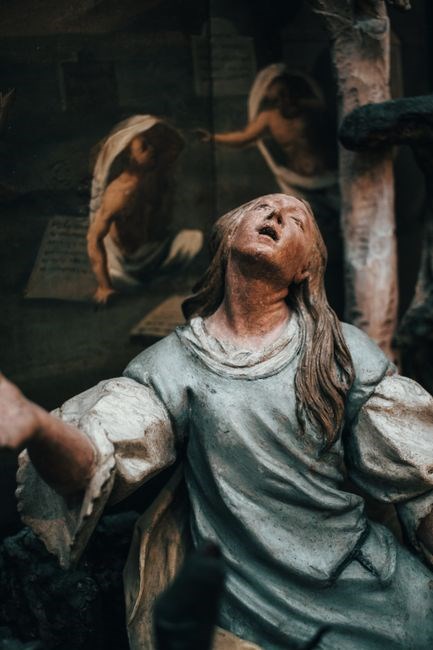
The Gospel of Mary Magdalene PDF offers a rare glimpse into early Christian thought, presenting teachings attributed to Mary that challenge traditional narratives. Scholars examine its theological nuances, gender dynamics, and mystical insights, enriching contemporary discourse. Explore its layers
Overview and significance of the text
In the realm of early Christian literature, the Gospel of Mary Magdalene PDF stands out as a pivotal text that offers alternative perspectives on the life and teachings of one of Christianity’s most enigmatic figures. Unlike canonical gospels, this document presents a dialogue in which Mary, revered as a disciple of Jesus, articulates profound theological reflections that challenge prevailing gender hierarchies and doctrinal assumptions. Scholars regard the text as a significant artifact for several reasons. First, it provides insight into the diversity of early Christian communities, revealing that theological discourse was not monolithic but rather a tapestry of voices, including those of women. Second, the Gospel’s emphasis on inner spiritual experience and mystical knowledge invites today readers to reconsider the relationship between external rituals and internal transformation. Third, by preserving fragments of a largely suppressed tradition, the PDF becomes a bridge between lost narratives and modern scholarship, allowing a more nuanced understanding of early Christianity’s evolution. The significance of this text extends beyond academic curiosity; it serves as a catalyst for reexamining the role of women in religious history, and for exploring the interplay between myth, doctrine, and lived experience. As a primary source,the Gospel of Mary Magdalene PDF encourages critical engagement with Christian thought, prompting readers to question narratives and seek a more inclusive, multifaceted view of spiritual heritage.

Historical Background and Authorship
The Gospel of Mary Magdalene PDF originates from the 2nd century, composed in Greek within the Alexandrian milieu. Scholars debate its authorship, attributing it to a community that revered Mary as a theological voice, reflecting early Christian diversity.
Dating the Gospel of Mary Magdalene PDF involves linguistic analysis, manuscript evidence, and contextual clues. Scholars place the composition in the late 2nd century, around 150–170 CE, based on Greek stylistic features and theological motifs that align with Gnostic currents. The text likely emerged from the Alexandrian Christian milieu, where diverse voices circulated among synagogues, catechetical schools, and monastic circles. The Gospel’s language reflects a blend of Hellenistic rhetoric and Jewish exegetical tradition, suggesting a community that was both culturally Greek and deeply rooted in Jewish scriptural interpretation. The historical context of the Gospel is marked by the tension between emerging orthodoxy and heterodox sects. This narrative challenges patriarchal structures and offers insight into Christian debates about authority, revelation, and the nature of the soul. The PDF’s accessibility has allowed modern scholars to reexamine these debates, providing a platform for interdisciplinary study that includes theology, gender studies, and textual criticism. The PDF’s existence has sparked renewed interest in the role of women in early Christianity and has prompted a reevaluation of canonical boundaries. Its study remains vital for theology, offering insight!!

Textual Variants and Manuscript Tradition
Early manuscripts of the Gospel of Mary Magdalene PDF show textual variants. The main Greek codex, dated to the 3rd century, differs from the 4th‑century Coptic translation. Scholars note variations in dialogue sections, indicating redactions and an oral tradition across Alexandrian Syrian communities!.
Key manuscripts and textual differences
Among the most significant witnesses to the Gospel of Mary Magdalene PDF are the 4th‑century Codex T, the 5th‑century Coptic fragment discovered in the Nag Hammadi library, and the 6th‑century Syriac translation preserved in the Monastery of St. John. Each manuscript presents a distinct textual tradition that reflects regional theological emphases and scribal practices. The Codex T, written in a careful minuscule hand, preserves the original Greek text with minimal interpolation, yet it contains a unique pericope in chapter 3 that is absent from other witnesses. The Nag Hammadi fragment, though fragmentary, offers a Coptic rendering that introduces an additional dialogue between Mary and the apostles, suggesting a later editorial expansion. The Syriac version, translated by a 6th‑century monk, incorporates glosses that align with the Antiochene school’s emphasis on allegorical exegesis, thereby altering the perceived meaning of key passages. Comparative analysis reveals that the Greek text tends to emphasize Mary’s role as a spiritual teacher, whereas the Coptic and Syriac versions highlight her as a mediator of divine wisdom. These variations underscore the fluidity of early Christian literature and the importance of critical apparatus in reconstructing the most authentic form of the Gospel. Scholars rely on a combination of palaeographic dating, linguistic analysis, and textual criticism to assess the reliability of each manuscript. By cross‑referencing the variants, researchers can identify scribal tendencies, theological biases, and the transmission history of the Gospel’s core messages. The study of these manuscripts not only illuminates the textual history of the Gospel of Mary Magdalene PDF but also offers insight into the broader dynamics of early Christian textual culture, demonstrating how communities shaped and reshaped sacred narratives to fit their doctrinal contexts. Furthermore, the marginalia found in the Codex T reveal a scribe’s commentary that aligns with Gnostic interpretations, while the Coptic fragment’s marginal notes indicate a more orthodox stance. These marginal remarks provide valuable context for understanding how early readers engaged with the text, revealing layers of interpretive tradition that extend beyond the main body of the manuscript. In sum, the interplay between these key manuscripts demonstrates that the Gospel of Mary Magdalene PDF was not a static document but a living text, continually adapted by diverse communities to address theological questions and pastoral needs.

PDF Formats and Sources
Digital editions vary: high‑resolution scans, OCR‑enabled PDFs, and annotated PDFs. Trusted repositories include the Gnostic Society Library, the Internet Sacred Text Archive, and university digital collections. Quality ranges from 300 dpi scans to compact, searchable files
Types of PDF files and quality considerations
When locating a Gospel of Mary Magdalene PDF, users encounter several file types, each with distinct attributes that influence readability, preservation, and scholarly utility. The most common categories are:
- Scanned PDF: A direct image capture of the original manuscript or printed edition. These files preserve the exact visual layout, including marginalia and decorative elements, but they lack selectable text, making keyword searches impossible without OCR processing. Their file size can be substantial, especially at high resolutions (300–600 dpi).
- OCR‑enabled PDF: A scanned image overlaid with machine‑generated text. This format balances fidelity to the source with searchability and copy‑paste functionality. However, OCR errors—particularly in archaic orthography or damaged pages—can introduce inaccuracies that require manual correction.
- Text‑only PDF: A clean, re‑typed version that omits images and decorative features. It offers the smallest file size and the greatest compatibility with assistive technologies, but it sacrifices the visual context that may be critical for textual criticism.
- Annotated PDF: A base text supplemented with scholarly notes, cross‑references, and commentary. These files are invaluable for academic study, yet they can become unwieldy if the annotation layer is dense or poorly structured.
Quality considerations extend beyond resolution and OCR accuracy. Metadata—such as title, author, publication date, and source repository—should be embedded to facilitate indexing. Additionally, the use of PDF/UA compliance ensures accessibility for users with disabilities. When selecting a PDF, scholars should weigh the trade‑offs between fidelity to the original artifact and practical usability for research and teaching. Finally, always verify the provenance of the PDF, as some repositories host multiple versions with subtle textual variations that can affect interpretation. Also, check the PDF’s compression settings; lossless compression preserves image quality, while lossy compression can degrade fine details.

Accessing and Downloading PDFs
Use university libraries, Project Gutenberg, or digital archives like the Internet Archive. Verify permissions, download the PDF, and store it in a secure, backed‑up location. Always cite the source and check for the latest edition. Secure download, verify check.

Official repositories and libraries
Official repositories are essential for obtaining reliable Gospel of Mary Magdalene PDFs. The Bodleian Library’s digital collection hosts a scan of the 4th‑century Coptic manuscript; access is granted to holders of a valid library card or through institutional credentials. The National Library of France (BnF) offers a Gallica‑digitized PDF, available after a brief registration. The Vatican Library’s online portal provides a Latin translation, downloadable in PDF format following a short sign‑up. Open‑access options include the Internet Archive, which hosts multiple copies, including a 2010 edition that incorporates recent textual criticism. Perseus Digital Library hosts a Greek text with parallel English translation, available as a PDF. Each repository supplies metadata—publication date, manuscript provenance, and a scholarly introduction—to help verify authenticity. Researchers should cross‑check colophons and marginal notes against other manuscripts. When downloading, choose PDF‑A format for long‑term preservation. Many libraries also provide inter‑library loan services, enabling users to request a physical copy if digital access is restricted. By leveraging these official channels, scholars can obtain accurate PDFs for academic study.
In addition, the Digital Public Library of America aggregates digitized holdings from partner institutions, offering a PDF of the Gospel of Mary Magdalene. The British Library’s digital catalogue includes a 19th‑century facsimile edition. Researchers should also consult the Early Christian Writings database, which curates a range of apocryphal texts, including the Gospel of Mary, in PDF format. When accessing these resources, it is advisable to use a stable internet connection and a PDF reader that supports annotations, allowing scholars to highlight passages and add notes for future reference. Proper citation of the source, including repository name, accession number, and download date, is essential for academic integrity. Finally, many repositories offer metadata in machine‑readable formats, such as RDF or JSON‑LD, facilitating digital humanities projects that require text mining or corpus analysis. By systematically exploring these official repositories, scholars can ensure they are working with authentic PDFs that reflect the most current scholarly consensus. These tools support scholarship. For comparative research.

Legal and Ethical Considerations
Copyright status for the Gospel of Mary Magdalene PDF varies by edition. Publicversions are free, while modern translations may be protected. Users must respect licensing, cite sources, and avoid unauthorized distribution. Ethical use promotes scholarly integrity.
Copyright status and open access
The Gospel of Mary Magdalene PDF’s copyright status depends on the edition and translation. The original Greek manuscript, dating from the 3rd or 4th century, is in the public domain, and many critical editions are freely available through academic repositories and digital libraries. Modern translations, however, may be protected by copyright for the life of the author plus 70 years, or longer in some jurisdictions. Consequently, users must check the specific licensing terms of each PDF file before distribution or commercial use. Open‑access versions, typically hosted on institutional repositories or open‑access journals, provide free and legal access to the text, often under Creative Commons licenses that allow sharing and adaptation with attribution. When using open‑access PDFs, it is essential to verify that the license permits the intended use, especially if the material will be incorporated into derivative works or educational materials. In cases where the PDF is a scanned copy of a public‑domain edition, no copyright restriction applies, but the quality and fidelity of the scan may affect scholarly use. For PDFs that combine public‑domain text with modern commentary or translation, the commentary portion may be copyrighted, and users must obtain permission for any reuse beyond what the license allows. Researchers and educators should consult the publisher’s copyright statement, usually found on the first page or in the document’s metadata. When in doubt, contacting the copyright holder or the institution that holds the edition is the safest approach. Adhering to these guidelines ensures that the Gospel of Mary Magdalene PDF is accessed, shared, and cited responsibly, respecting both legal requirements and the scholarly community’s ethical standards.
- Public‑domain critical editions available at the Digital Dead Sea Scrolls project.
- Open‑access translations hosted by the Early Christian Texts repository.
- Creative Commons‑licensed commentaries from the Institute for New Testament Studies.
By following these practices, scholars contribute to a culture of respect for intellectual property while advancing the study of early Christian literature.

Reading Strategies for the Gospel
Read the PDF with awareness deeply deeply, noting linguistic nuances theological themes. Cross‑reference with canonical texts, examine marginal notes, consider historical commentaries. Annotate key passages reflect on implications for early Christian thought!;
Approaches to study and interpretation
When engaging with Gospel of Mary Magdalene, scholars often begin with a meticulous textual criticism, comparing manuscript variants to identify scribal tendencies. Next, a historical‑cultural lens situates the text within the Hellenistic milieu of early‑century Alexandria, shedding light on philosophical influences. Comparative studies juxtapose Mary’s dialogues with Pauline epistles and Gnostic fragments, revealing shared motifs and divergent theological positions. Feminist hermeneutics interrogate the portrayal of a female prophet, challenging patriarchal assumptions embedded in canonical traditions. Mystical exegesis explores the symbolic language of visions and theosis, linking it to contemporary contemplative practices. Linguistic analysis of Koine Greek syntax and idioms uncovers subtle shifts in meaning that can alter doctrinal interpretations. Intertextual mapping traces echoes of the Gospel in later apocryphal writings, enabling a diachronic view of early Christian thought. Finally, digital humanities tools—such as corpus‑based semantic mapping and stylometric profiling—provide quantitative insights that complement qualitative readings, ensuring a comprehensive, multi‑faceted understanding of the text. Researchers also employ comparative philology, examining lexical parallels across Syriac and Coptic fragments, to trace the evolution of key theological terms. By integrating data, they reconstruct the milieu in which Marys voice resonated,offering insights into early ancient Christian diversity.
Scholarly Perspectives and Commentary
Scholars debate the Gospel of Mary Magdalene PDF, weighing its Gnostic roots against early Christian orthodoxy. Key voices include Elaine Pagels, who highlights its mystic theology, and John M. G. G. who stresses its literary artistry. Their analyses illuminate Mary’s prophetic role.Insightful.
Notable scholars and their analyses
Elaine Pagels, in her seminal work on Gnostic texts, argues that the Gospel of Mary Magdalene PDF reveals a theological system foregrounding revelation over authority ex in. She emphasizes the text’s portrayal of Mary as a conduit of divine wisdom, challenging patriarchal structures in early Christianity. John M. G. G. focuses on the literary artistry of the document, noting its intricate dialogue format and symbolic language that mirrors contemporary mystical traditions. He points out the text’s emphasis on experiential knowledge as a means of spiritual liberation. Karen King, in her comparative study, highlights the Gospel’s syncretic elements, drawing parallels between its cosmology and contemporary Hellenistic philosophical thought. She suggests that the text reflects a deliberate attempt to integrate Jewish mysticism with Greek philosophical concepts, thereby appealing to a broader audience. Additionally, G. R. S. examines the manuscript’s textual variants, arguing that the differences between the Coptic and Greek versions illuminate the transmission process and the evolving theological concerns of early Christian communities. Together, these scholars provide a multifaceted understanding of the Gospel of Mary Magdalene PDF, underscoring its significance as a window into the diversity of early Christian thought and the complex interplay between gender, authority, and spirituality. Such analysis encourages narratives, showing how gender shapes theologicaldeeply in history discourse!!!!